
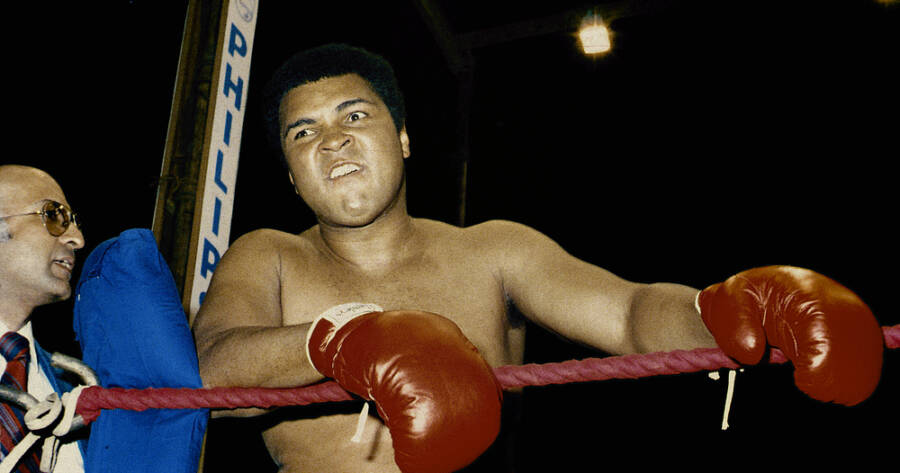
Muhammad Ali’s legacy represents courage, conviction, and social progress on a global stage. From winning Olympic gold in 1960 to reshaping heavyweight boxing with unmatched speed and strategy, Ali set new standards for excellence. Equally influential was his voice for civil rights and moral principle, challenging injustice with unwavering resolve. His story reflects not only greatness in sport, but also the lasting impact of a public figure who sparked dialogue, inspired change, and redefined activism.
Muhammad Ali: The Greatest’s Career Highlights and Legacy
Muhammad Ali, originally named Cassius Marcellus Clay Jr., stands as a towering figure in both boxing and social activism. Ali’s career in the ring was legendary, beginning at just 12 years old when he joined a local boxing gym after the theft of his bike. Within six weeks, he earned his first amateur victory, marking the start of an extraordinary journey. His talent became undeniable with a gold medal at the 1960 Olympic Games in Rome, setting the foundation for his dominance in professional boxing.
The Rise to Heavyweight Champion
Ali’s rise to worldwide fame accelerated when he defeated Sonny Liston in 1964, becoming the youngest heavyweight champion at the time. Viewed as an underdog, he shocked critics and immediately cemented his status as “The Greatest.” After this milestone, he converted to Islam and embraced a new identity, reflecting personal conviction and a deep commitment to faith and principle. His refusal to participate in the Vietnam War led to a three-year suspension from boxing, symbolizing his dedication to justice and moral belief during a turbulent era.
Legendary Fights and the Rope-A-Dope
Ali’s career was defined by iconic bouts that showcased innovation, agility, and endurance. His 1974 victory over George Foreman in the “Rumble in the Jungle” demonstrated the famous rope-a-dope strategy, in which he absorbed punches to exhaust his opponent before securing a knockout. The “Thrilla in Manila” against Joe Frazier in 1975 further cemented his reputation for resilience. That punishing contest ended with Frazier unable to continue, highlighting Ali’s remarkable stamina and strategic brilliance in the ring.
Muhammad Ali’s Influence Beyond the Ring
Ali’s reach extended far beyond boxing. He used his platform to amplify messages of dignity, equality, and self-determination, even when facing backlash. His friendship with Malcolm X and public opposition to the Vietnam War reflected a willingness to challenge systems of power. Ali’s legal battle after refusing military induction stands as a defining moment in his legacy, underscoring his resolve to act according to conscience regardless of consequence.
Cultural Influence and a New Model for Athlete Activism
Muhammad Ali reshaped cultural expectations of public figures by proving that athletes could also be leaders in social change. His confidence, poetic self-expression, and refusal to be silenced influenced how Black athletes were seen in media and society. Ali paved the way for future generations—such as Kareem Abdul-Jabbar, Colin Kaepernick, and LeBron James—to use their platforms to address inequality, identity, and injustice.
His impact was global. Ali became an international symbol of empowerment and resistance, admired in countries far beyond the United States. His willingness to speak boldly about race, religion, and humanity expanded the role of athletes in cultural dialogue and reshaped public expectations of celebrity responsibility. In doing so, Ali helped transform sports into a stage for advocacy, influencing social movements and inspiring activists around the world.
A Lasting Legacy
After retiring in 1981, Ali continued to inspire through philanthropy and humanitarian work. His Parkinson’s diagnosis led him to raise awareness and support research, while the Muhammad Ali Center in Louisville promotes education, character development, and global understanding. His later honors—including lighting the Olympic flame in 1996 and receiving the Presidential Medal of Freedom in 2005—reflected worldwide respect for his impact.
Inspirational Icon in Culture and Society
Ali’s story has been preserved in documentaries, films, and literature, ensuring his voice continues to resonate. His famous phrase, “float like a butterfly, sting like a bee,” remains etched in cultural memory. The global response to his passing in 2016 affirmed his stature as a unifying figure whose influence crossed generations, borders, and belief systems.
Remembering Muhammad Ali
Muhammad Ali demonstrated that greatness is defined not only by victory, but by conviction, sacrifice, and service. His life reveals the power of an individual to stand firm in principle, uplift others, and challenge injustice with courage. For those seeking to understand the connection between sports and activism, Ali remains the defining example—an enduring symbol of strength, humanity, and change.